




What was the last thing that made your body feel good? Maybe it was the first sip of tea or blast of water in your morning shower, the warm silk of a cat’s back arching to meet your fingers, pulling on a T-shirt softened by repeated washing or the moment you align the numbers on your bike lock and it releases with a weighty clonk? Maybe somewhere you encountered a paper coffee cup with a cardboard sleeve embossed with ridges that offered “a surprisingly gratifying tactile delight”? Maybe you’ve never considered paper cups much; I hadn’t before I read that in Ian Bogost’s The Small Stuff: The Sensory Enchantment of Everyday Life.
The Small Stuff is a manifesto for tuning into the tiny opportunities for gratification being human offers, even in increasingly frictionless, AI-enabled, automated lives. Starting from that paper cup, Bogost – an interdisciplinary academic at Washington University, video game designer and writer – explores how we’ve become what he calls “dematerialised” and how to fight back, analysing the idiosyncratically pleasing qualities of plastic drinking fountain tumblers, using “steel-crank-roll paper towel dispensers” and – don’t tell me this one doesn’t resonate – peeling the plastic protective film off, in his case, a wooden knife block (I have happy memories of doing this on our microwave door).
From the first few pages I feel instinctively that tapping into these tiny enchantments could be life-enhancing, but also challenging. I move through the world with the grace of Mr Bean, bumbling, pratfalling, unable to operate the simplest mechanism or tool. I keep a tally of self-inflicted physical incidents in one day: I drop pasta down my top, steer my bike into a bollard, am suddenly unable to close the clasp on trousers I’ve worn for ages, can’t get a shower gel pump to work and bang my shin on the dishwasher door. I’m also funny about sensory stuff: there’s a “right” mug and spoon, a narrow range of acceptable temperatures for everything and all sorts of noises I hate. Can you find enchantment in the physical world when your relationship with it is so fractious? I’m taking a week to find out.
Day 1: the daily grind
I’m already fretting. It feels as if capturing the pleasure of these moments means being more fully present – what does that mean for someone like me, who has never managed a microsecond of mindfulness? “I have always found mindfulness less useful than I expected to as a technique,” agrees Bogost, surprisingly. “The difference is this problem of gratification is not really in your head. In some ways, I think it’s exactly the opposite of mindfulness – getting out of your head and into your body and into the world.” Bodyfulness, I think to myself, but I don’t say it, because it’s a repulsive coinage.
I start asking everyone I know what gives them bodily gratification and both my friend Tom and my elder son rave about manually preparing morning coffee: grinding, weighing water and primping the ground beans with a pronged instrument called a “Weiss distribution tool”. It sounds like a hipstery drag – my machine does all the work – but it’s a good starting point, so I unearth a manual grinder and stovetop espresso pot. Inevitably, I’m baffled by the grinder and need my husband’s help assembling, but it has a nice heft and a pleasingly textured surface, and as the beans crunch through the mechanism, there’s a real haptic satisfaction; the smell is wonderful too. Grinding hurts my bad elbow, though, and while the Bialetti makes a fun bubbling noise, it feels agonisingly slow at 6.30am – and my soulless machine makes better coffee.
Bogost isn’t, he says, suggesting analogue or old-fashioned physical sensations are better, though he understands people pining for rotary phones or tape decks. “Some of that stuff was so visceral, really gratifying, and it’s been lost.” But there are plenty of opportunities to enjoy physical stuff in a digital world (a section of the book is devoted to ASMR – those sensory, tingle-inducing videos of things like towel folding or cooking – and how it allows people to access pleasurable sensations off as well as online). “It’s not really the analogue experience – it’s living fully in your senses in the physical world.” Maybe it’s OK to relish pressing a button and letting my machine expertly caffeinate me?
Day 2: spreading the joy
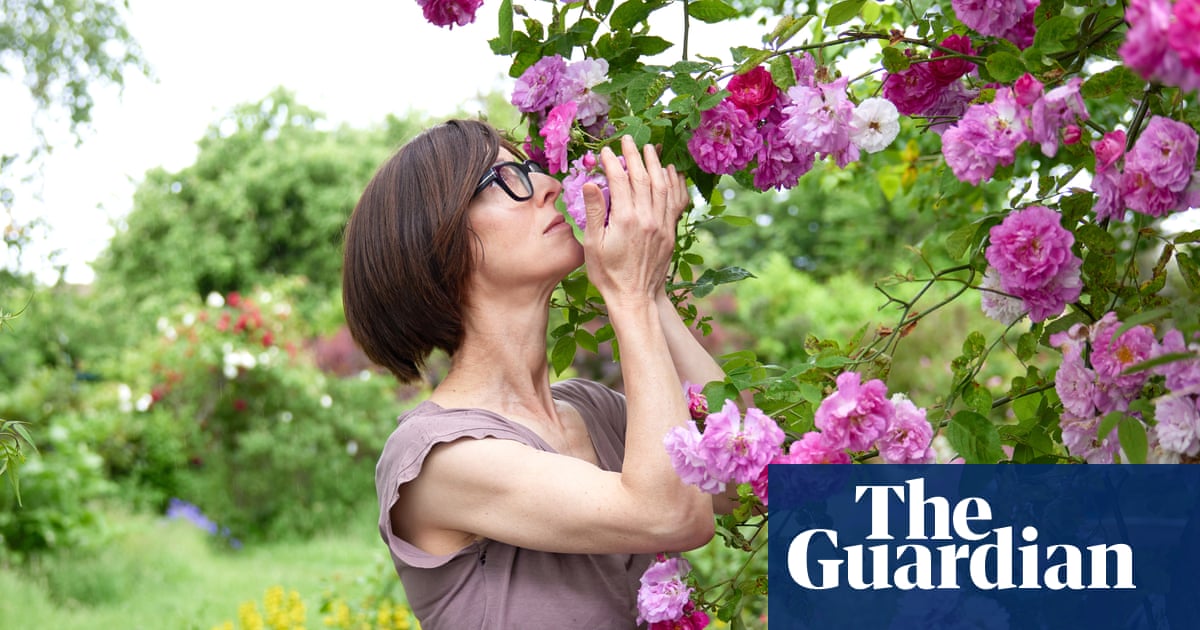
On a trip to our local repair cafe, I ask some fixers what they find gratifying. Organiser Catherine Djimramadji tells me about the sensory pleasure she gets from knitting coarsely textured wool, while Catherine Heinemeyer, busy mending a hem, shares her love of textured textiles, getting out a piece of grainy, scalloped-edge vintage linen to show me. I’m neither crafty nor manually dexterous, but as I potter home, recalling an anecdote of Djimramadji’s about licking trees (she enjoys it occasionally), I realise I keep touching plants. It’s irresistible: the grainy seedheads of grasses, robust, oily rosemary needles, leaves with velvety soft hairs and best of all, in early summer, big, soft, scented roses. I don’t just touch or smell; I stick my whole face into them almost every time and it’s such an intense and transitory pleasure I resolve to do it even more. I give our fig tree a lick when I get home; it’s fine, but not for me.
Food is, though, and it’s one of Bogost’s gratifications too. “I add a bit of nuts and granola into my yoghurt in the morning,” he suggests as an easy entry point, “so that I can feel it crunch under my teeth.” In the book he calls this gratifying contrast “orthogonality” (“a fancy name for a perpendicular”). In a food context, it can mean contrasting tastes or textures, but Bogost also describes how people enjoy activities quite different from their day jobs: a busy university English teacher who empties his head with fly fishing; a journalist who finds peace in solo knitting. I can definitely eat orthogonally: at lunchtime I pick lettuce from the garden (selecting and neatly snipping leaves with scissors is its own sensory pleasure) and put it in a bowl with nuts, avocado and other interesting textural bits. I toast a fat slice of sourdough until the edges char, spread it thickly with crunchy peanut butter, then eat the lot, combining textures with each mouthful – it’s ecstasy. Is toast my greatest sensory enchantment?
Loving tools isn’t essential for achieving sensory satisfaction, but I’m envious of the joy they bring users, including my extremely practical husband, whose only suggestion of a sensory delight (he’s a bit baffled by the concept) is his favourite drill. He gives me a go and it’s a lovely heavy beast – I enjoy revving it, and the satisfying “clonk” – haptic and audible – of turning it off. It’s fun drilling a hole in the garage wall under his supervision, but he loses me trying to show how pleasingly it tackles long screws. “No, you’re not straight,” he says, repeatedly adjusting my angle. I end up pretending I “get” it when I don’t.
Writer Tim Hayward is a tool person. He’s currently obsessed with making the experience of using the main tool of our shared trade – keyboards – more enjoyable by creating bespoke ones and enthuses, infectiously, about the “thocc” sound keys make when you strike them and the different tactile experiences they can offer. I hadn’t really thought of my MacBook as a tool, but it’s actually a lovely one – I like the little bounce of the keys under my fingertips, the cool smoothness of the trackpad and the sense of vague competence it gives me as I touch-type. It’s a relief to realise that such a huge part of my daily life offers some gratification.
Since most of my friends are middle-aged, weeding keeps coming up, too – especially the bone-deep satisfaction of getting a deep root out. It gives me a newfound appreciation for another tool: my hori hori gardener’s knife, a heavy wooden-handled piece of badassery that digs out big-rooted weeds with lethal accuracy.
Day 4: a mug’s game
I use the same mug every morning but, inspired by watching reels of Japanese ceramics shops, I get out a long-forgotten, vaguely Japanese-looking sea-green and blue cup, with gentle undulations and an unglazed bottom. I try it out, and it’s a triumph – my thumb keeps exploring the ridges and roughness for ages, like I’m deeply stoned.
I’m still stroking it when my friend Tom texts me another source of sensory pleasure – his sausage dog, Gershwin: “Past a certain hour, he comes to lie next to me and I untangle his armpit hair.” I lost a lot of sensory gratification when my whippet Oscar died – gently pulling his silky ears, rubbing his scratchy paw pads, cupping his head with my palm, stroking his bare pink belly. There’s some enchantment in hen keeping – I love the smooth glide of running a hand along their backs, and holding a still-warm egg is wonderful – but oh, I miss Oscar. When I meet an acquaintance walking their spaniels later, I insist on spending ages tickling the curly hair on their floppy ears.
Day 5: grab that little moment of gratification
It’s a bad day – I’m under pressure and in pain (I’ve hurt my shoulder), there are spillages, a wasted journey, the dentist and a tissue in the wash. Sensory gratifications struggle to cut through the stress: I usually enjoy the steady, calibrated glide of our car’s steering wheel through my fingers but I’m too impatient to take it in and while I spot the dentist’s waiting room has exactly the paper cups with a ridged sleeve Bogost describes, I’m in no state to appreciate them (I put one in my bag to examine later). Back home, I stomp off to the greenhouse, where finally, a reliable gratification – pinching out my tomato plants’ side shoots – slows me down and straightens me out. Any tomato grower knows this pleasure: the neat pincer movement of finger and thumb, the slight hairiness of the stems and the heady smell of gently crushed tomato leaf.
Bogost reassures me that struggling to enjoy the small stuff when bigger stuff goes off-kilter is standard. “Any little moment of gratification that seeps through the cracks, I just try to take. Maybe it lasts a second, and that’s all, and that’s enough. And if it’s qualitatively worse than it would have been under a different mental state, that’s OK.”
“Another way to think of it,” he adds, “is that there’s no scarcity to sensory experience – there’s more pleasure to be had.” There is. When I’m getting ready for bed, I’m reminded of something Catherine Heinemeyer from the repair cafe said: if you can’t enjoy the small stuff of daily life, “every tooth-brushing is drudgery”. It helps me notice that much as I moan about the tyranny of contemporary dental hygiene demands, I quite relish the tingle of my electric toothbrush on my front gums.
Day 6: sharpening kitchen skills
I don’t enjoy cooking but it’s regrettably necessary and people keep telling me how much they love elements of it. “Adding sugar to whipped egg whites and watching it turn glossy … and scraping the fat off the top of a chilled bowl of beef stock,” are two of Sue’s; Annie loves making mirepoix (finely chopped carrots, celery, onions etc) using her drawstring manual chopper, “scraping out with a wooden spatula … and it sizzling away.” My friend Cristina relishes this stuff so much so she took a career break from biochemistry to work in professional kitchens. I invite myself round to see her knifework. She sharpens a deadly looking eight-inch thing with wonderful dexterity, demonstrating how to test the sharpness against my nail. “I like the crafting of it,” she says. “How it’s weighted; they obviously spend a lot of time figuring out how things feel in your hand.” Watching her quarter, deseed and peel a cherry tomato is extremely satisfying, and I fall into a reverie (I think we both do) as she expertly fillets two seabass.
Back home, I’m emboldened to try my son’s heavy, sharp knife, which I’m usually too chicken to use. The weight and efficacy of its tomato slicing (obviously I don’t attempt peeling) is wonderful – it definitely adds a dimension to the tedium of food prep.
Day 7: drinking it all in
To celebrate a week of small sensory joys, I make a dry martini using a sensorily inspiring technique Hayward described: smashing three giant ice cubes, stirring the shards in a heavy jug with booze, then pouring the concoction into a chilled glass with a freshly peeled twist of lemon zest. Cracking the ice with a pestle is fun, the transporting scent of fresh lemon oil is delicious, as is the finished drink, but it’s too much faff for me to adopt regularly.
One person’s drudgery, it transpires, is another’s sensory delight. Over the week, I’m assured there’s enchantment in ironing, vacuuming and clearing gunk out of sink drains (my most-loathed chores); my friend Thom even claims washing the dishwasher filter daily is “rapture”. I’ve been introduced to a few new delights, but the lovely process of discussing other people’s little gratifications has mostly helped me tune into my own: teasing apart intertwined plant seedlings with the perfect degree of pressure; the click of my scent bottle’s magnetic lid; the cool smoothness of a fresh pillowcase under my cheek.
The clue is in the book’s name: it is small stuff – “strange, silly and trivial”, as Bogost writes. But it also felt quite profound to recognise my simple bodily existence has so much to offer, if I let it. As Bogost says: “I am living in my body the whole time. How do I allow it to happen to me?” I put the dentist’s paper cup on my desk, to remind me of what he calls this “low-level, ongoing practice”, and of the tiny delights even a klutz like me can find in the physical world. Then I catch my leg in my computer cable, spilling a nearby glass of water over my trousers. Baby steps.
The Small Stuff: The Sensory Enchantment of Everyday Life by Ian Bogost is published by Allen Lane on 7 July, price £20

