




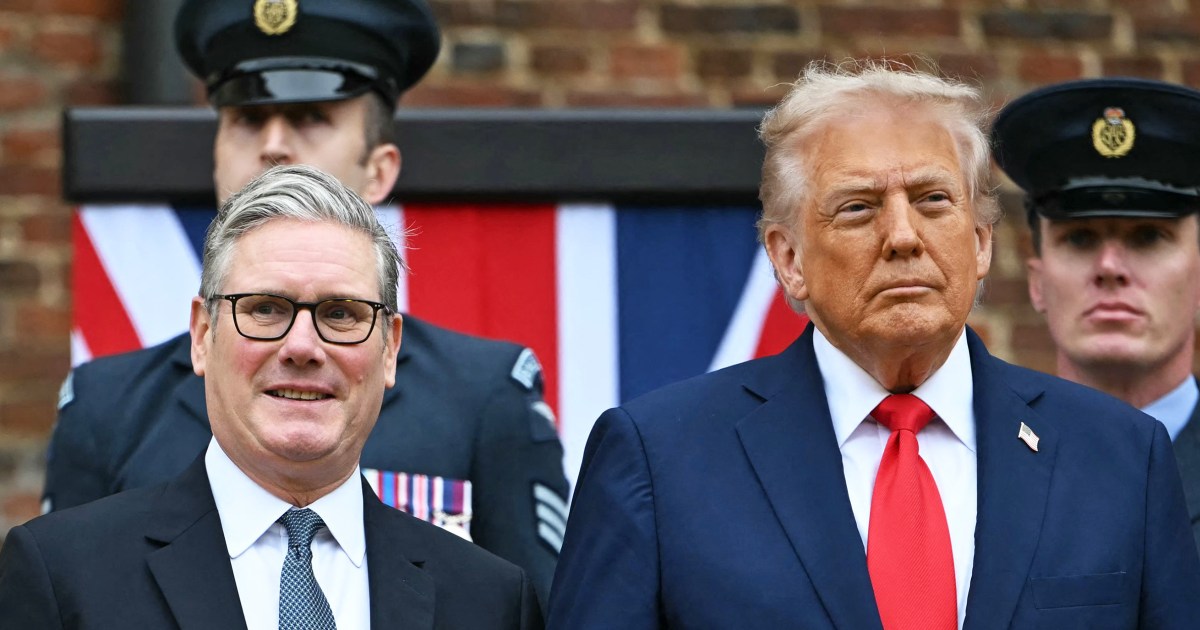
LONDON — President Donald Trump traded pageantry for politics Thursday as he ended a lavish stay hosted by Britain’s King Charles III at Windsor Castle and met with Prime Minister Keir Starmer at his country residence, Chequers.
Hailing the “unbreakable bond” between the two nations, Trump said ties between America and the U.K. were “priceless” and the two governments were “making those ties closer than ever before.”
Starmer has lavished Trump with praise and royal pomp in a bid to curry favor with Washington as Britain looks to deepen its economic ties with the U.S., ease tariffs and hold difficult conversations on a range of thorny issues — including Israel’s offensive in Gaza and Russia’s war in Ukraine.
The pair held a joint news conference ahead of Trump’s return home, where they continued to emphasize their countries’ long and close ties. The two leaders also avoided commenting on each others’ domestic policies, which is customary, when asked about hot button issues such as immigration, free speech, renewable energy and the recognition of the state of Palestine.

But Starmer was all smiles as he and his wife Victoria greeted Trump at Chequers, the prime minister’s official country residence some 40 miles north of London.
There, they met with American and British business leaders including the chief executives of Nvidia, Microsoft, Rolls-Royce and Boeing, before signing a multibillion-dollar tech prosperity agreement that British officials hope will bring thousands of jobs and sweeping investment to the U.K.
Speaking ahead of the signing, Trump said the deal had been “long in the making” and thanked Starmer for his hard work to get it over the line. “With this agreement, our cherished friendship with the United Kingdom is getting stronger and stronger,” he said.
Starmer said the deal marked “a great day for the special relationship.” He earlier showed the president items from the archive of Winston Churchill, who coined the term.
The meeting took place after Trump woke up in Windsor Castle after a night of royal opulence and a lavish state dinner for 160 dignitaries and business leaders.

A day of unprecedented pomp saw Trump — the first elected politician to be invited for two state visits — and his wife treated to the full array of British pageantry and the largest ceremonial military welcome for a state visit in living memory.
“Our countries have the closest defense, security and intelligence relationship ever known,” Charles said in his speech addressing Trump at the state dinner. “In two World Wars, we fought together to defeat the forces of tyranny. Today, as tyranny once again threatens Europe, we and our allies stand together in support of Ukraine, to deter aggression and secure peace.”
Ukrainian President Volodymyr Zelenskyy thanked the king early Thursday “for his steadfast support,” with sanctions on Russia and security guarantees for Kyiv continued sticking points between Washington, London and European powers.
The British government has meanwhile been increasingly critical of Israel’s deadly offensive in Gaza, including its new assault on famine-stricken Gaza City. The U.K. is soon expected to join a number of countries in recognizing Palestinian statehood, a move that has outraged Israeli officials.
There may also be tricky questions about the febrile atmosphere each leader is dealing with at home. Trump arrived in Britain in the wake of Charlie Kirk’s fatal shooting, while his host has been beset by far-right protests, sinking poll ratings and a recent scandal that could see Jeffrey Epstein hang over Thursday’s diplomatic events.

Even at Windsor Castle, protesters projected images of Trump alongside Epstein in an act of protest that saw four people arrested.
The meeting with Starmer also comes days after Britain’s ambassador to the U.S., Peter Mandelson, was fired following revelations about his own ties to Epstein.
And on the streets of London, thousands attended a protest march that culminated with a rally outside Parliament.
In recent polling highlighting British sentiments toward the president, 70% of Britons said they disliked Trump and 44% said they thought his state visit should be canceled.

Reuters, The Associated Press and Henry Austin contributed.
